Choosing the right Blood Transfusion Set is a clinical decision, not a simple purchasing task. The set must match the blood component, delivery method, patient condition, and local transfusion protocol. A red-cell transfusion may require a standard blood filter, while platelets or special products may need different handling. The wrong configuration can delay treatment or compromise safe administration.
Look closely at the spike, drip chamber, filter, tubing, clamps, and patient connector. These small parts matter. Confirm that the tubing fits the intended pump or gravity system. Check the filter size, priming instructions, sterility, packaging integrity, and expiration date. Some patients may require materials with specific compatibility characteristics, so clinical teams should review manufacturer instructions and facility policies carefully. Qualified nurses, transfusion specialists, and procurement staff can provide practical insight from real bedside use.
Details often reveal quality.
A clear drip chamber supports visual monitoring. Smooth clamps help control flow without sudden movement. Secure connections reduce avoidable handling during a busy transfusion. However, no single set suits every situation. Product descriptions can appear complete, yet important limitations may remain unclear. That is where careful questioning helps. Ask whether the set is approved for the intended blood component, compatible with required equipment, and supported by reliable quality documentation. When uncertainty remains, pause and consult the transfusion service or manufacturer. Safe selection depends on evidence, training, and honest recognition of what you do not know.
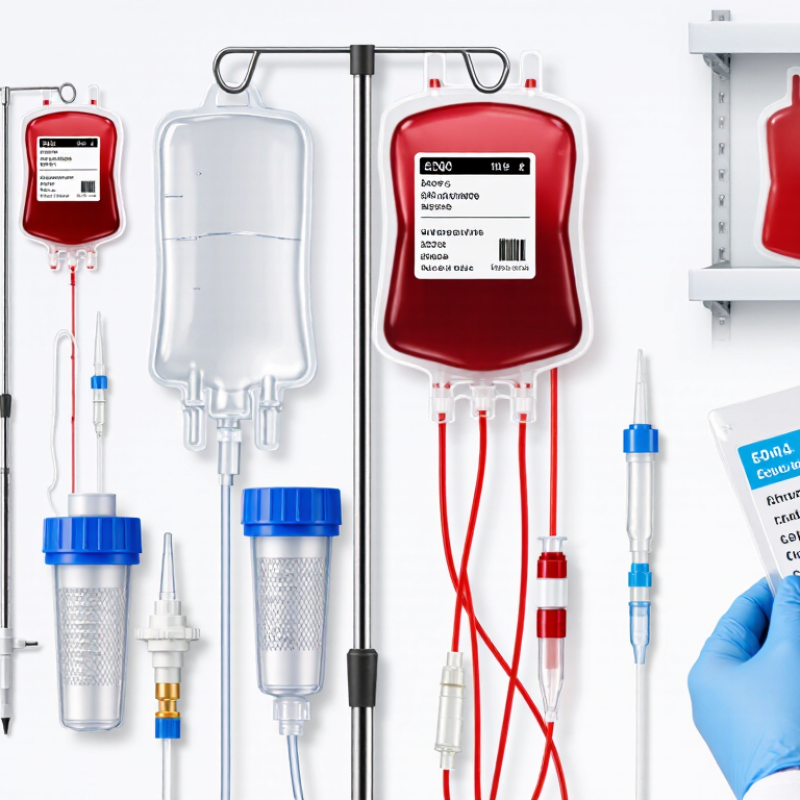
How to Choose the Right Blood Transfusion Set?
A blood transfusion set delivers whole blood, red cells, or other blood components safely and consistently. Its main parts include a piercing spike, drip chamber, tubing, filter, injection port, clamp, and patient connector. The filter is critical. AABB standards commonly support filters around 170–260 micrometres, helping remove clots and aggregates before they reach the patient. It is a small component with a serious purpose.
Selection should match the blood component, delivery method, and clinical protocol. Check whether the set suits gravity flow or an approved infusion pump. Confirm connector security, tubing length, priming requirements, and the visibility of the drip chamber. WHO reported 118.5 million blood donations globally in 2019, showing the enormous scale of transfusion practice. Consistent equipment matters at that scale. It also matters in one quiet bedside moment.
The 2023 SHOT haemovigilance report continues to identify transfusion-associated circulatory overload and process failures as important safety concerns. A suitable set cannot prevent every error. Staff still need patient identification, compatibility checks, careful observation, and accurate documentation. I would not choose a set by appearance alone. Clear labels and smooth clamps help, but they are not enough. In practice, the “best” set may change with patient condition, component type, and local procedure. That uncertainty deserves attention.
| Selection Dimension | Typical Information | Why It Matters | Recommended Check |
|---|---|---|---|
| Primary Purpose | Administration of whole blood, red blood cells, plasma, or platelets through an intravenous access device. | Blood components require a dedicated administration set with an appropriate filter and fluid path. | Confirm the intended blood component and follow the facility transfusion protocol. |
| Integrated Filter | Common blood administration sets use a 170–260 micrometre filter; exact specifications vary by product and local standards. | The filter helps retain clots, cellular aggregates, and particulate matter during transfusion. | Check the labelled filter pore size and verify that it is approved for the blood component being administered. |
| Spike and Drip Chamber | A sterile spike connects the set to the blood container; the drip chamber allows visual monitoring of flow. | Correct connection and visibility support controlled, air-free priming and monitoring. | Ensure the spike is compatible with the container and that the chamber can be filled and observed clearly. |
| Tubing Length and Internal Volume | Many sets use approximately 150–300 cm of tubing; priming volume depends on the tubing design and accessories. | Longer tubing may improve positioning flexibility but can increase priming volume and resistance. | Select a length that suits the patient, pump arrangement, bed space, and required flow rate. |
| Flow Control | Most sets include a roller clamp; some versions are designed for use with an infusion pump. | Accurate flow control is important because transfusion speed depends on patient condition and clinical orders. | Confirm pump compatibility, tubing requirements, and the maximum permitted flow rate. |
| Injection Site or Y-Site | Some sets include a needle-free access port or Y-site for connection and flushing according to institutional policy. | An access site can support priming, sampling, or connection management without disconnecting the main line. | Use only approved solutions and medications; do not add medications to blood components unless specifically authorized. |
| Connector Type | Luer-lock connectors are commonly used to connect the set to an intravenous catheter or extension line. | A secure, leak-resistant connection reduces the risk of disconnection and blood loss. | Verify connector compatibility and inspect all connections before starting the transfusion. |
| Material and Safety Features | Medical-grade tubing may be made from PVC or other validated polymers; some products are DEHP-free or latex-free. | Material selection can matter for patient allergies, institutional requirements, and compatibility with blood products. | Review the material declaration, latex status, and any restrictions for vulnerable patient groups. |
| Sterility and Packaging | Blood transfusion sets are generally supplied sterile and intended for single use. | Sterile packaging helps maintain product integrity until use and reduces contamination risk. | Check the expiry date, package integrity, storage conditions, and single-use instructions. |
| Replacement and Use Period | Replacement intervals vary by institution, product instructions, and the type of infusion; many protocols replace the set after a transfusion episode. | Replacing the set at the appropriate time helps manage contamination, clotting, and material-use risks. | Follow the manufacturer’s instructions and the healthcare facility’s blood administration policy. |
| Compatibility with Solutions | 0.9% sodium chloride is commonly used with blood components; compatibility must be confirmed before using other fluids. | Some solutions can cause hemolysis, clotting, or other incompatibilities when mixed with blood products. | Use only solutions approved by the transfusion protocol and consult qualified clinical staff when uncertain. |
| Clinical Setting | Standard sets may be used for routine transfusion; specialized sets may be required for rapid, pressure-assisted, or warmed transfusion. | The clinical environment determines the necessary flow-control, warming, pressure, and monitoring features. | Choose the set based on the ordered transfusion rate, equipment, patient age, and emergency requirements. |
Note: Product specifications and transfusion procedures vary by jurisdiction, facility, and clinical application. Always verify the device instructions for use and follow the applicable institutional protocol.
Start with the patient’s needs, prescribed component, access device, equipment, and monitoring plan. Packaging alone is not enough.
Consider fluid restrictions, venous access, medicines, and past transfusion reactions. An infant may need precise flow control.
A connector or tubing may not fit a pump. Similar-looking sets are not always interchangeable.
Inspect the package for damage, check the expiry date, and confirm the set matches the order and facility procedure.
Trained staff should check patient identification, the blood component, compatibility records, consent requirements, and the monitoring plan.
Observe the patient closely, especially early on. Fever, rash, breathing difficulty, pain, or sudden discomfort needs prompt attention.
Do not assume it is compatible. Seek guidance from trained staff and follow the facility’s approved procedure.
Pause and ask a supervisor or transfusion service. Memory can be unreliable, even during familiar routines.
A loose clamp or unclear label can cause confusion. Rechecking may feel repetitive, but it can catch missed details.
Choosing the right Blood Transfusion Set begins with understanding its purpose and key components, including the filter, tubing, and connectors. Selection should reflect the patient’s needs, the clinical setting, and the requirements of the planned transfusion. Factors such as filter design, tubing dimensions, connector type, and expected flow should be reviewed together rather than considered in isolation, since they can affect suitability and ease of use.
Before use, confirm that the set is compatible with the intended equipment and transfusion procedure, and check its sterility, packaging, and applicable quality and regulatory requirements. Product specifications and instructions should be reviewed carefully, and any uncertainty about selection or use should be discussed with qualified healthcare professionals. Their assessment helps ensure that the chosen set is appropriate for the patient and the clinical situation.

